







Balto® Flexor - Adjustable Hock Brace
Rated 3.0 out of 5 stars
2 Reviews
Supports:
- Achilles Tendon/Ligament Injury
- Tarsal Bone Fractures
- Tarsus (Hock) Instability
- Hyperextension
- Hyperflexion
- Arthritis/Arthrosis

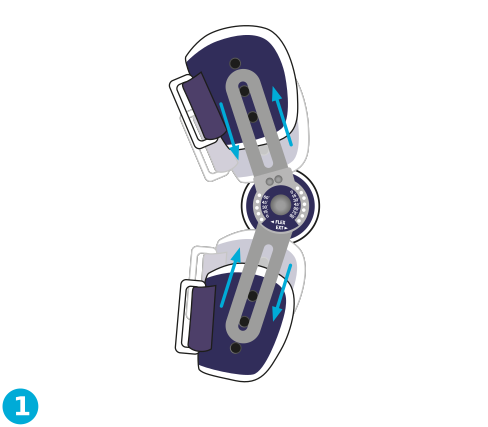
Featuring an adjustable hinge, the Balto® Flexor is a rehabilitation and post-surgical brace intended for canine ligament injuries and joint maladies of the hock. In the event of congenital or traumatic instability of the canine tarsal joints, this brace has been specifically engineered to offer stability.
The canine Flexor Hock Brace offers complete range of motion (R.O.M) regulation, enabling either complete or partial immobilization of the affected joint. This feature permits customization to suit the specific requirements of the companion. Post-surgically, regulated flexion-extension motions of the tarsal joint promote proper healing by reducing excessive strain and stress, depending on the needs of your dog.
BRACE APPLICATIONS
BRACE FEATURES
Comes in sizes x-small/small through large/x-large (x-small/small through x-large/xx-large). To find the best size for your pet, visit the sizing chart here
For dogs weighing over 50kg (110 lbs.) the brace should not be extended more than 1 cm (0.4 inch) at length for the top portion and 1 cm at length for the bottom portion. Adjusting the height too far from the center can create issues.
Learn How Properly Fit the Balto Flexor to Your Pet
Non-neoprene braces from Balto® are constructed from superior materials; neoprene is notorious for harboring pathogens, offering insufficient support, and deteriorating rapidly. A range of dimensions guarantees a snug fit. A no-pinch product. Recommended for all ages, unless veterinarians advise otherwise. When applicable, apply the brace in proportionate increments of time for animals under the age of two to avoid potential growth disruptions.
 |

|

|
|---|---|---|
Uses |
Used to control the range of motion (ROM) and stabilize the tarsus or hock. | Use to stabilize the tarsus or hock and provide compression. |
Splints |
The aluminum splints are not removable, but are adjustable. | The aluminum (slightly adjustable) splints are removable bilaterally. |
Fit |
Uses adjustable hinges and padding for a secure fit. | Uses adjustable Velcro for a secure fit. |
| SIZE | DISTANCE A-B | WEIGHT |
|---|---|---|
| XS/S | 3.15 - 4" | 22 - 33lbs |
| M/L | 4 - 5.5" | 33 - 99lbs |
| XL/XXL | 5.5 - 7" | Over 99lbs |
| SIZE | DISTANCE A-B | WEIGHT |
|---|---|---|
| XS/S | 8-10 cm | 10-15 Kg |
| M/L | 10-14 cm | 15-45 Kg |
| XL/XXL | 14-18 cm | Over 45 kg |


A clean brace not only prevents infections, irritation, and a stinky smell; but it also allows your brace to last longer. To help support the longevity of your bracing device, here are some of our tips on how to properly clean your orthopedic bracing:
Featuring an adjustable hinge, the Balto® Flexor is a rehabilitation and post-surgical brace intended for canine ligament injuries and joint maladies of the hock. In the event of congenital or traumatic instability of the canine tarsal joints, this brace has been specifically engineered to offer stability.
The canine Flexor Hock Brace offers complete range of motion (R.O.M) regulation, enabling either complete or partial immobilization of the affected joint. This feature permits customization to suit the specific requirements of the companion. Post-surgically, regulated flexion-extension motions of the tarsal joint promote proper healing by reducing excessive strain and stress, depending on the needs of your dog.
BRACE APPLICATIONS
BRACE FEATURES
Comes in sizes x-small/small through large/x-large (x-small/small through x-large/xx-large). To find the best size for your pet, visit the sizing chart here
For dogs weighing over 50kg (110 lbs.) the brace should not be extended more than 1 cm (0.4 inch) at length for the top portion and 1 cm at length for the bottom portion. Adjusting the height too far from the center can create issues.
Learn How Properly Fit the Balto Flexor to Your Pet
Non-neoprene braces from Balto® are constructed from superior materials; neoprene is notorious for harboring pathogens, offering insufficient support, and deteriorating rapidly. A range of dimensions guarantees a snug fit. A no-pinch product. Recommended for all ages, unless veterinarians advise otherwise. When applicable, apply the brace in proportionate increments of time for animals under the age of two to avoid potential growth disruptions.
|
|
|
|
|---|---|---|
Uses |
Used to control the range of motion (ROM) and stabilize the tarsus or hock. | Use to stabilize the tarsus or hock and provide compression. |
Splints |
The aluminum splints are not removable, but are adjustable. | The aluminum (slightly adjustable) splints are removable bilaterally. |
Fit |
Uses adjustable hinges and padding for a secure fit. | Uses adjustable Velcro for a secure fit. |
| SIZE | DISTANCE A-B | WEIGHT |
|---|---|---|
| XS/S | 3.15 - 4" | 22 - 33lbs |
| M/L | 4 - 5.5" | 33 - 99lbs |
| XL/XXL | 5.5 - 7" | Over 99lbs |
| SIZE | DISTANCE A-B | WEIGHT |
|---|---|---|
| XS/S | 8-10 cm | 10-15 Kg |
| M/L | 10-14 cm | 15-45 Kg |
| XL/XXL | 14-18 cm | Over 45 kg |
A clean brace not only prevents infections, irritation, and a stinky smell; but it also allows your brace to last longer. To help support the longevity of your bracing device, here are some of our tips on how to properly clean your orthopedic bracing:
Our 10-year-old dog, Archer, hadn't been able to go for a walk in over four months due to a detached ligament. We tried multiple solutions with little success—until we discovered the Balto Flexor.
Since using this brace, Archer has been able to enjoy his daily walks again. It has truly given him back his mobility and significantly improved his quality of life. I sincerely appreciate the thoughtful design: it's sturdy and supportive, yet fully adjustable. It's also surprisingly easy to clean and maintain, which makes a big difference day to day.
We did learn a few things along the way, though. After several months of use, we noticed a sore developing on the inside of Archer's foot. It took us some time to identify the cause, but it appeared that the seam where the edging material joins on the inner side of the brace was rubbing the same spot repeatedly. Once the sore healed, wrapping his foot with a little gauze before putting on the brace solved the problem and made a world of difference.
After about nine months of daily use, we also found that the Velcro no longer held securely despite regular cleaning with a rubber brush to remove hair. To keep the brace functioning, we purchased additional Velcro straps and wrapped them around the outside for extra support. Archer looks a little Frankenstein-esque these days, but he's mobile, comfortable, and happy—and that's what matters most.
Thank you, Balto, for creating a product that has helped our dog get back to enjoying life.
Thank you so much for taking the time to leave a review. We're thrilled to hear that your pup is happy and moving around more comfortably with the brace. Knowing it has made a positive difference means so much to us! 🐾
I’m disappointed with this purchase overall. While the brace itself functions as intended, the materials do not match the $500 price point.
Within three months of normal use, the leather components showed significant wear and deterioration. For a product designed for daily use on a dog, this level of durability is not acceptable, especially for a medical or assistive brace.
We contacted customer service to ask about repair or replacement and we were told the issue could not be addressed because it was outside the 30-day window. The only option offered was a 20% discount toward purchasing another brace. Given the short lifespan of the materials, this solution does not feel reasonable or supportive. Their solution was to pay again for a product that has already failed.
At this price, I expected higher-quality materials and better long-term support. Potential buyers should be aware that while the brace may work initially, durability and post-purchase support appear to be limited.
Hi Regan,
We’re sorry to hear about your experience and appreciate your feedback. We understand how frustrating it is when a product doesn’t meet expectations, especially for something used daily.
Our warranty policy covers the first 30 days, and while the discount offered was intended as a goodwill gesture, we understand it may not have felt like a sufficient solution.
If you have any further questions, please feel free to reach out to our team at support@baltocanada.com